
Most SEO Reports Don’t Show What Actually Hurts Rankings
Most SEO reports explain how a website looked during the audit, but not how it changed after releases, tracking scripts, and frontend updates started affecting real user experience. On large ecommerce websites, rankings often begin dropping long before traditional reports clearly show what actually went wrong.
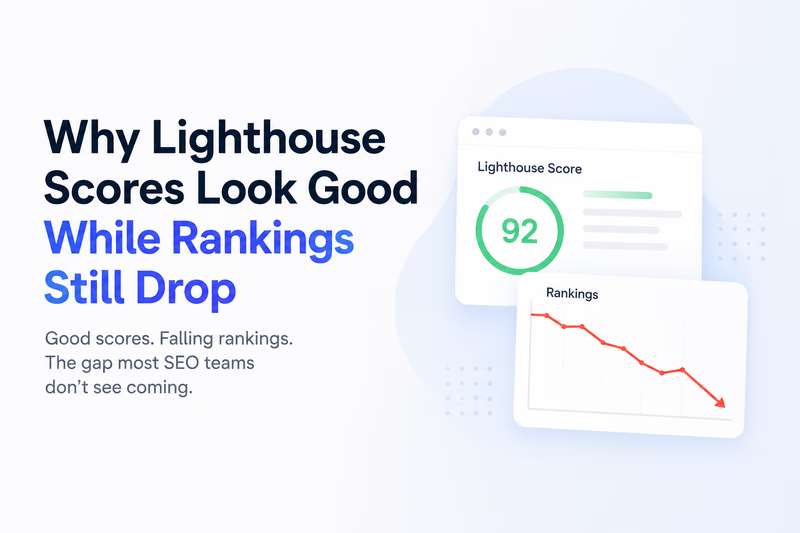
Most SEO reports show how a website looked at the moment of the audit, not how it changed after releases, tracking scripts, and frontend updates started degrading real user experience. On large ecommerce sites, that gap is where rankings quietly slip: the report looks healthy, but it never captured the regressions building up across thousands of URLs between audits.
Why SEO reports often create false confidence
Most SEO reports look impressive in client meetings. The agency prepares a polished SEO client reporting document, exports Lighthouse scores, reviews technical recommendations, adds ranking graphs, and delivers it all in a professional presentation. From the outside the process looks structured and reliable.
Then rankings start dropping a few weeks later. This is where many agencies hit the same problem: the original report was not technically wrong, but it also never explained what was damaging rankings underneath the surface. It happens often on large ecommerce sites and media platforms, where technical conditions constantly change as releases, frontend updates, tracking integrations, merchandising experiments, and third-party scripts start interacting. A static report can show the homepage looks healthy at one moment in time. It rarely explains how performance behaves across hundreds or thousands of URLs after several deployments land close together.
Why Lighthouse reports rarely tell the full story
A lighthouse report website audit can still be useful, especially during migrations or major technical cleanups. The problem is that many teams treat one Lighthouse report as if it represents the entire website. On modern ecommerce platforms that assumption gets dangerous fast.
A homepage can score above 90 while deeper templates quietly become unstable on mobile. Product pages accumulate rendering delays after a new recommendation engine goes in. Category pages get heavier after merchandising updates change how dynamic filters load. None of that necessarily shows up in a quick audit SEO report review, which is one of the biggest reasons agencies struggle to explain ranking drops even when the technical reports still look healthy.
Why rankings usually drop before reports catch up
Most reporting workflows move slower than modern websites. A frontend release ships on Monday. Marketing adds new tracking later that week. Personalization tools expand across product pages. Several scripts start competing for browser resources at once. By the time the next SEO report audit is generated, the site may already behave very differently from when the previous report was created.
This gets especially hard on enterprise ecommerce sites where:
- multiple teams deploy changes simultaneously
- templates behave differently across devices
- Core Web Vitals fluctuate after releases
- rendering issues affect only certain page types
- mobile performance degrades gradually over time
A free site audit report or best free SEO report tool usually captures only a snapshot. It does not explain how the platform evolved between releases, and that gap between reporting and operational reality is where many ranking problems go invisible.
Why clients eventually stop trusting SEO reports
One of the hardest parts of agency work is explaining why rankings declined right after the client received a positive report. The customer opens a polished SEO client report example showing acceptable scores, stable visibility graphs, and completed recommendations, while traffic, conversions, or mobile engagement keep moving the wrong way. The conversation gets uncomfortable fast, and clients naturally ask:
- Why did rankings decline if the reports looked healthy?
- Which release caused the issue?
- Why are only certain templates affected?
- Why did mobile traffic drop first?
- Why did Search Console start showing unstable URLs?
Most static reporting systems aren’t built to answer those questions. They explain the current state of the website. They rarely explain the timeline behind the degradation.
Why agencies need more than static reports
This is why many agencies are moving beyond traditional SEO client reporting. The goal is no longer generating another SEO report for free every month. Modern teams increasingly need operational visibility that helps them understand:
- when regressions started
- which templates became unstable
- how releases affected rendering behavior
- why mobile responsiveness changed
- how technical problems spread across the site over time
That visibility matters a lot on large ecommerce sites, where rankings are heavily shaped by frontend behavior, rendering performance, JavaScript execution, and template stability. A seo keyword report or ranking export can show that traffic changed. It usually can’t explain what technically caused the decline.
Why continuous visibility matters more than beautiful reports
The agencies doing best on large ecommerce accounts are rarely the ones making the most visually impressive reports. They are the ones keeping enough historical visibility to understand how website behavior changes after releases.
That difference matters more every year. Modern websites evolve continuously, and frontend deployments, tracking systems, analytics tools, personalization engines, and third-party integrations constantly affect how pages behave underneath the surface. Many of those changes never show up clearly in a static report until rankings are already hit. That is why more SEO teams are moving toward continuous monitoring instead of relying only on isolated reports and occasional audits, because on large websites the biggest ranking problems usually develop quietly long before traditional reports notice them.