The 2026 Performance Engineering Checklist: Beyond Basic Optimization
To achieve Green scores in 2026, developers must look beyond image compression. Here's the complete checklist for network, edge, assets, and third-party governance.
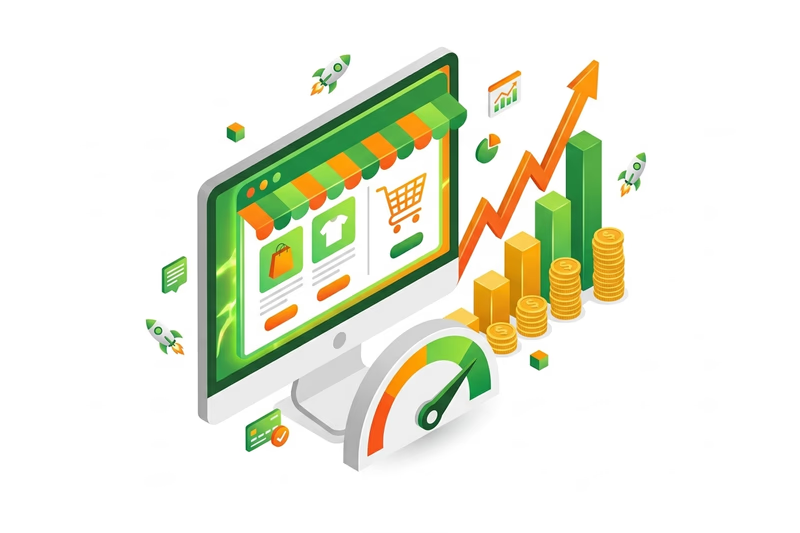
Getting to green Lighthouse scores in 2026 takes more than compressing images. This performance optimization checklist covers the four layers where the wins now live: the network protocol, the edge, your frontend asset pipeline, and third-party script governance. Here is the checklist for each.
Network layer: protocol parity
- HTTP/3 (QUIC): make sure your server and CDN fully use HTTP/3 to remove head-of-line blocking and speed up handshakes on lossy mobile networks.
- TLS 1.3 and 0-RTT: enable Zero Round-Trip Time so returning users reconnect almost instantly.
- Early Hints (103): send 103 Early Hints so browsers start preloading critical assets before the main HTML response is ready.
The edge: moving logic closer to the user
Don’t just cache static files at the edge. Move A/B testing, personalization, and authentication logic to edge workers (for example Cloudflare Workers or Vercel Edge). This removes the latency of hitting a centralized origin server. Mirror your API data globally so database queries don’t have to travel across oceans.
Asset mastery: AVIF and beyond
JPEG and WebP are now secondary. Move to AVIF for UI elements to gain roughly 50% better compression. Drop monolithic bundles in favor of an islands architecture that ships zero JavaScript by default and hydrates interactive elements only when they enter the viewport.
Third-party governance
- Never load a third-party chat or video widget directly. Use facades or lite versions that load the full script only on user interaction.
- Offload non-critical scripts like analytics to Web Workers with Partytown, keeping the main thread free for user interactions.
Modern speed optimization is an ongoing discipline. Working through these layers is how you build a platform that stays fast as it grows.