
Why Checking SEO on Just a Few Pages Is No Longer Enough
Most websites do not lose rankings overnight. They slowly degrade after releases, plugins, tracking scripts, and frontend updates quietly damage Core Web Vitals across hundreds or thousands of pages without anyone noticing.
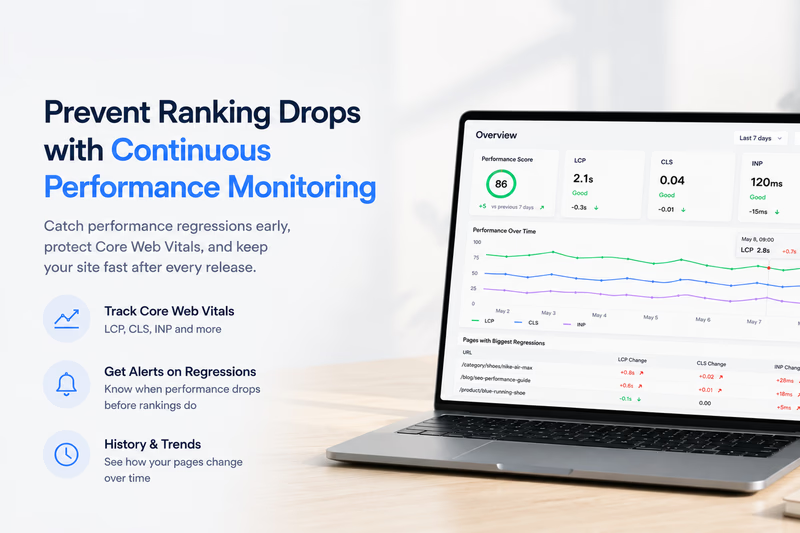
Most websites don’t lose rankings overnight. They degrade slowly, as releases, plugins, tracking scripts, and frontend updates quietly damage Core Web Vitals across hundreds or thousands of pages. Checking a handful of important pages by hand used to be enough to catch that. On a modern site it isn’t, because the problems hide on the pages nobody checks.
Most companies still approach SEO the way they did years ago. They open a few important pages, run a quick audit, check PageSpeed scores, fix a couple of warnings, and assume the site is in good shape. The problem is that modern websites are far more complex than they used to be. A single ecommerce platform can generate thousands of URLs through filters, pagination, localization, dynamic search pages, campaign parameters, and product variations. Checking only a few pages manually no longer reflects the real technical condition of the site, which is why more teams are rethinking how they check page SEO at scale.
Why traditional SEO checks miss problems
Most SEO issues don’t appear everywhere at once. The decline is usually gradual. A new plugin increases JavaScript payloads. A marketing tool injects extra scripts. A redesign affects rendering. An analytics platform slows mobile interaction. At first everything still looks mostly fine, but underneath the surface performance slowly degrades across hundreds or thousands of pages.
This is especially dangerous because many teams still rely on manual workflows to check SEO web performance. They test a homepage, check a few landing pages, maybe run Lighthouse once before deployment. But performance rarely fails uniformly, so you have to look beyond the homepage at the whole site. Meanwhile deeper pages quietly fail Core Web Vitals for weeks, and by the time rankings start dropping, nobody remembers which release caused it.
Why PageSpeed monitoring matters more than ever
Website performance is no longer just a developer concern. Search visibility, user experience, conversion rates, and mobile usability are all directly tied to technical performance. That is why more companies now continuously monitor PageSpeed website metrics instead of running occasional one-time audits.
The challenge is scale. Large websites can contain thousands or even millions of unique URLs, and running Lighthouse manually across pages like that is unrealistic for growing SEO teams. This is exactly why automated workflows are becoming critical. Teams increasingly need to:
- test site for SEO issues continuously
- monitor PageSpeed sites after releases
- run Lighthouse audits automatically
- detect regressions early
- compare mobile and desktop performance
- track historical changes over time
Without automation, technical SEO becomes reactive, and reactive SEO usually means discovering problems after traffic already declined.
Why running Lighthouse once is not enough
Many companies still treat Lighthouse like a launch checklist. They run it before release, save a screenshot with green scores, and move on. But websites constantly evolve, and every release changes something:
- frontend components
- third-party scripts
- rendering behavior
- analytics tools
- personalization systems
- tracking pixels
Performance is never permanently fixed. Without continuous monitoring, sites slowly get heavier and less stable, which is why modern SEO teams run Lighthouse audits on recurring schedules instead of relying on occasional manual checks. Small regressions spread quietly, and large websites rarely notice the damage right away.
The shift toward scalable SEO monitoring
Modern technical SEO is moving away from isolated audits toward continuous visibility. Companies increasingly need systems that let them:
- check page SEO across thousands of URLs
- identify failing Core Web Vitals pages
- monitor large PageSpeed sites automatically
- detect performance regressions after releases
- prioritize technical fixes faster
- improve on page optimization checker workflows
The difference between high-performing SEO teams and struggling ones is often not knowledge. It is visibility. The teams winning long term are usually the ones finding technical problems before Google notices them at scale.
What scale means for your SEO
Most websites don’t lose rankings because of one catastrophic mistake. They lose them gradually, through hundreds of small technical issues that quietly accumulate after releases. A script here. A plugin there. A regression nobody noticed on mobile. Over time the site gets slower, less stable, and harder for both users and search engines to process. That is why scalable monitoring is becoming one of the most important parts of modern technical SEO, because checking a few pages manually is no longer enough for websites operating at scale. The practical starting point is a bulk Lighthouse audit across the whole URL list, so you find the failing template instead of sampling around it.