
Why Monthly Audits Are No Longer Enough
Most ecommerce websites change too quickly for monthly SEO audits to provide reliable visibility anymore. By the time the next report is generated, releases, Shopify apps, tracking systems, and frontend updates may have already changed how rankings and Core Web Vitals behave across hundreds of pages.
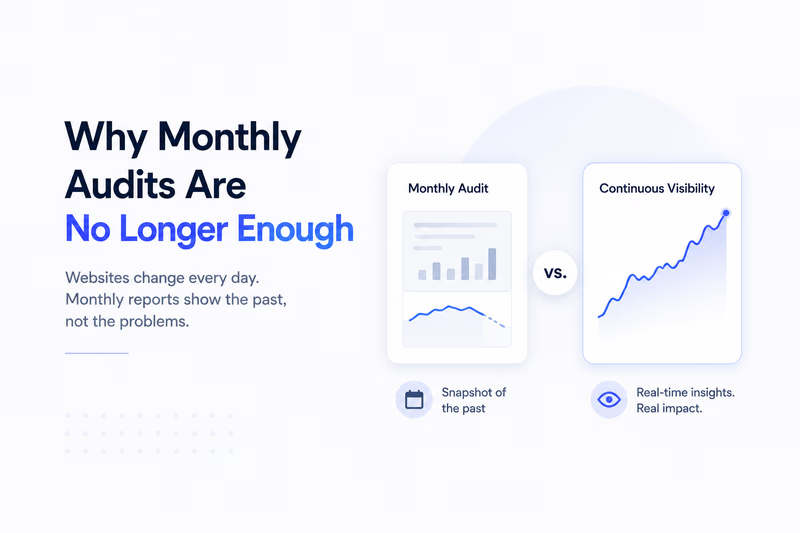
Most ecommerce websites now change too quickly for monthly SEO audits to give reliable visibility. By the time the next report is generated, releases, Shopify apps, tracking systems, and frontend updates may have already changed how rankings and Core Web Vitals behave across hundreds of pages. A monthly snapshot describes a website that no longer exists.
Why traditional SEO reporting started breaking down
For years the standard agency workflow looked simple: run an on page check, prepare a site SEO report, export ranking data, generate a technical audit, and send the client a polished monthly presentation explaining what changed since last time. That still works reasonably well on smaller websites.
The problem is that modern ecommerce platforms no longer behave like static websites. They evolve continuously between reporting cycles, often changing dozens of times before the next SEO monthly report for client review is even prepared. A frontend deployment goes live on Monday. Marketing adds tracking scripts later that week. Merchandising teams launch experiments on category pages. Shopify apps expand across product templates. Recommendation engines change rendering behavior. Analytics tools inject extra JavaScript into important commercial pages. By the time the next audit arrives, the site may already behave very differently from when the previous report ran. That’s one of the biggest reasons monthly reporting is becoming unreliable on large ecommerce sites. The real issue is audit frequency: a monthly cadence can’t keep up, which is why monthly audits fail to catch what happens in between.
Why static audits miss what happens between releases
Most SEO audits still work like snapshots. A traditional SEO analysis report free tool or audit SEO report can explain the technical condition of the site at one point in time, identifying slow templates, rendering issues, broken metadata, or Core Web Vitals problems visible during the crawl. What it usually can’t explain is how the site changed after multiple releases landed close together, and that gap matters more than many teams realize.
Large ecommerce sites usually become unstable gradually. Product pages grow heavier after new integrations. Category pages behave differently after merchandising updates. Mobile responsiveness degrades after several unrelated frontend changes start interacting. None of these necessarily appear during a single crawl, which is why many agencies discover that a monthly SEO report for client communication no longer gives enough operational visibility to explain ranking changes confidently.
Why Shopify stores become difficult to audit at scale
This is especially visible on Shopify sites. A typical Shopify lighthouse audit may show the homepage still performing reasonably well while deeper templates quietly accumulate problems underneath the surface. A new app affects rendering on product pages. A personalization system delays interaction on mobile. Collection pages get heavier after dynamic filtering logic changes. The homepage still passes Lighthouse checks, but rankings and user experience slowly decline across commercially important URLs.
That’s a frustrating situation for agencies. The customer opens the latest SEO report for client review and sees acceptable scores, while mobile traffic, conversions, or Core Web Vitals keep moving the wrong way. At that point static reporting starts colliding with operational reality.
Why agencies need continuous visibility instead of monthly snapshots
Modern SEO teams increasingly need to monitor thousands of URLs continuously instead of relying only on isolated reports. The challenge is no longer generating another SEO reporting tool for clients dashboard every month. Agencies now need enough historical visibility to understand:
- when regressions started
- which templates became unstable
- how releases affected rendering behavior
- why mobile responsiveness changed
- how performance evolved across large groups of pages over time
That visibility becomes critical on enterprise ecommerce platforms, where rankings are heavily shaped by frontend behavior, JavaScript execution, and rendering stability. A static page optimization report may still look healthy while technical problems quietly spread through important templates underneath the surface.
Why website audits at scale changed SEO workflows
As ecommerce platforms grew larger and more dynamic, agencies started facing a different operational challenge. Running website audits at scale is no longer just about identifying obvious technical issues. It is about maintaining visibility between deployments, frontend releases, third-party integrations, and merchandising changes that constantly affect how pages behave. This is why more teams are moving from isolated reporting toward continuous monitoring that can track:
- template-level regressions
- mobile rendering changes
- Core Web Vitals fluctuations
- performance changes after releases
- unstable product pages
- rendering inconsistencies across large URL groups
The sites performing best long term usually aren’t the ones generating the prettiest reports. They are the ones catching technical degradation before rankings, conversions, or user experience are seriously affected.
Why SEO reporting became an operational problem
One of the biggest changes inside SEO agencies right now is that reporting is no longer just a communication task. It became an operational visibility problem. Clients still expect reports, rankings, and technical summaries, but increasingly they also expect agencies to explain:
- why traffic changed
- which deployment caused the issue
- why only mobile rankings dropped
- why certain templates became unstable
- why performance changed after releases
Traditional SEO reporting workflows were never designed to answer those questions consistently, which is why many agencies are rethinking how they approach SEO client reporting entirely.
What monthly audits can’t cover
Monthly audits still have value. A good site SEO report or SEO audit report free download can help identify important technical problems and communicate website health clearly to clients. But modern ecommerce sites evolve too quickly for static reporting cycles alone to provide reliable visibility. Frontend releases, Shopify apps, third-party integrations, analytics systems, and rendering changes continuously affect how large websites behave underneath the surface. Without ongoing monitoring, many of those issues stay invisible until rankings and business metrics are already affected. This is why more agencies are moving beyond isolated monthly audits toward continuous technical visibility.