
Why Monthly SEO Audits Miss Critical Problems | Website Monitoring Guide
A technical SEO audit can reveal what is wrong today, but it cannot show everything that happened over the last month. Here's why website monitoring is becoming essential for modern SEO teams and large websites.
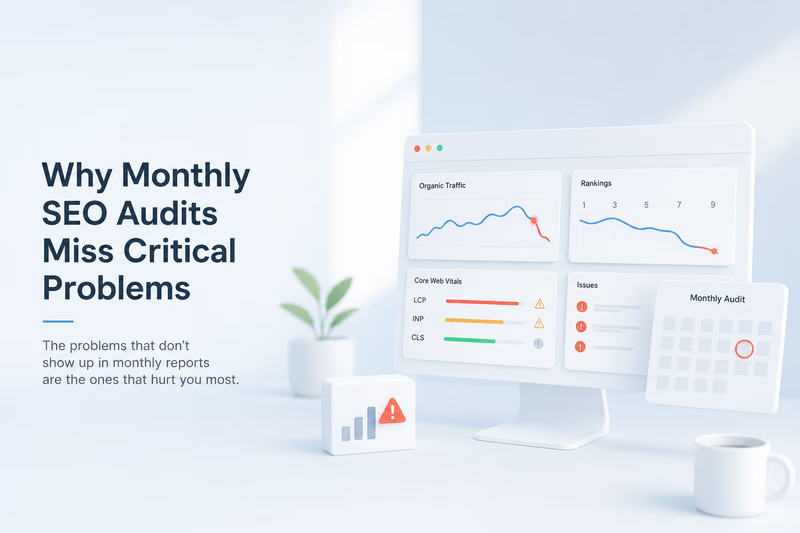
A monthly SEO audit tells you what’s wrong on the day it runs. It can’t tell you what happened during the other 29 days, which is exactly when most damage is done. On a modern website, releases, scripts, and third-party updates change performance and rankings constantly, so a monthly snapshot keeps missing the regressions that build up between audits. That blind spot is what this guide is about: here’s why it happens, and what to monitor instead.
For years, monthly SEO audits were considered a reasonable way to keep a website healthy. Agencies built reporting processes around them, internal marketing teams aligned them with monthly reviews, and clients got used to receiving a technical SEO audit every few weeks. The assumption was simple: if a website is checked regularly, important issues get found before they become serious.
That assumption becomes harder to defend every year. Modern websites change constantly. Developers release code multiple times a week, marketing deploys new tracking scripts through tag managers, product teams add widgets and experiments, and third-party services update automatically in the background. A site that looked perfectly healthy during an audit at the start of the month can behave very differently by the end of it.
The challenge isn’t that monthly SEO audits are wrong. It’s that they provide a snapshot while websites have become moving targets. Rankings, performance, crawlability, and user experience can change significantly between two scheduled reviews, and by the time a problem shows up in a report, the root cause may already be weeks old.
Why monthly SEO audits became the industry standard
The popularity of monthly SEO audits has practical rather than technical origins. Historically, a comprehensive technical SEO audit required significant manual effort. Crawling large websites took time, reporting took time, and agencies needed a predictable rhythm for client communication. So the typical SEO audit schedule became tied to monthly reporting cycles rather than to the actual pace of website change.
For many businesses this still feels logical. When discussing SEO audit frequency, most people naturally think in monthly reviews, quarterly reviews, and annual planning. The problem is that websites no longer evolve at that pace. A large ecommerce store may see dozens of meaningful changes between two audits: product pages updated, tracking scripts added, frontend components redesigned, infrastructure settings modified. None of these wait for the next audit.
This mismatch between audit schedules and website activity is one reason SEO monitoring has become so important. Teams that rely only on monthly reviews often find problems much later than teams that combine audits with ongoing visibility into what’s happening every day.
What happens between two SEO audits
A familiar scenario plays out in agencies and in-house teams all the time. A monthly report is delivered, rankings are stable, no major issues surface, and everyone moves on. Over the next few weeks the website keeps evolving. Marketing launches a campaign and installs extra scripts. Developers release a new navigation component. A recommendation engine goes live across product pages. A third-party review platform updates its JavaScript library.
Individually, none of these seem significant. The difficulty is that SEO problems rarely appear the moment a change is introduced. More often they emerge gradually as multiple changes interact. A slightly heavier JavaScript bundle may not affect rankings by itself. An analytics script may not create visible performance issues by itself. A personalization widget may not have a measurable impact by itself. Together, they can significantly change how pages load, render, and respond.
This is why website monitoring and technical SEO monitoring are becoming essential for larger sites. Traditional audits tell you what the website looked like on a particular day. Continuous monitoring helps explain what happened during the days and weeks that followed.
The hidden problems most audits never catch
Performance regressions
One of the most common issues that escapes traditional audits is gradual performance deterioration. Many websites launch with excellent metrics, strong Lighthouse scores, and healthy Core Web Vitals. Six months later the same site feels noticeably slower, yet nobody can point to a single release that caused it.
This usually happens because performance degrades through accumulation. Additional scripts, tracking tags, personalization tools, review widgets, recommendation engines, and frontend features each add small amounts of overhead. Individually they seem harmless. Collectively they create the kind of website performance issues that frustrate users and damage SEO. This is where performance regression monitoring becomes valuable. Instead of asking whether a page is slow today, teams can ask a more useful question: when did the page become slower than it used to be? That historical view often makes troubleshooting dramatically easier.
Core Web Vitals deterioration
Most Core Web Vitals problems don’t appear overnight. Largest Contentful Paint usually rises gradually as pages get heavier. Interaction to Next Paint often worsens as JavaScript execution grows more expensive. Layout instability frequently emerges after multiple design changes rather than one dramatic redesign.
A monthly website SEO performance test may catch the final symptom, but it rarely reveals the deterioration process itself. This is one reason Core Web Vitals monitoring and website performance monitoring have become standard practice among many enterprise SEO teams. Tracking trends over time provides far more context than reviewing a single report every few weeks.
Ranking drops and traffic losses
When organizations begin a website rankings drop audit, the decline has often been happening for a while already. The same pattern appears during a website rankings loss audit or a larger ranking drop analysis. By the time someone notices a visibility problem, the underlying issue may already be several releases old.
Traffic investigations are even harder. A typical SEO traffic drop investigation usually begins after a meaningful decline has already occurred. Teams then try to reconstruct the previous month by reviewing deployments, content updates, infrastructure changes, and Search Console data. The longer the delay between cause and discovery, the harder the investigation gets.
Why Lighthouse audits are useful but not enough
Lighthouse remains one of the most valuable tools for diagnosing technical and performance issues. A well-run website performance audit can quickly reveal render-blocking resources, oversized assets, inefficient JavaScript execution, and other bottlenecks that affect user experience.
The limitation isn’t Lighthouse itself. It’s treating Lighthouse as a periodic event rather than an ongoing source of insight. A single report can tell you how a page performed today, but not how that performance changed over the last thirty days. That’s where lighthouse monitoring becomes far more valuable than occasional lighthouse audits. Many organizations now use automated Lighthouse audits to build historical datasets instead of collecting isolated snapshots, because comparing current performance against previous weeks often reveals trends that stay invisible in a one-time report.
Continuous monitoring vs monthly audits
This shouldn’t be framed as monitoring versus audits. Both solve different problems. Monthly SEO audits are excellent for strategic reviews, prioritization, stakeholder reporting, and spotting long-term opportunities. Continuous monitoring serves a different purpose: it helps teams catch changes as they happen rather than weeks later.
Organizations that monitor performance continuously can spot deteriorating Core Web Vitals, emerging regressions, unusual ranking movements, and technical anomalies before they become major business problems. The earlier those signals are detected, the easier and cheaper they are to fix.
What modern SEO teams monitor continuously
Leading SEO teams rarely rely on a single report anymore. They combine periodic reviews with ongoing SEO monitoring that gives visibility into day-to-day changes. Commonly monitored areas include Core Web Vitals, Lighthouse metrics, crawlability, indexability, ranking movements, uptime, response times, and release-related performance changes.
The growth of website performance monitoring has also increased demand for specialized performance monitoring tools. These platforms detect changes automatically, compare performance across time periods, and show how releases affect website behavior. Instead of waiting for the next report, teams can respond while problems are still developing.
Audits and monitoring together
Monthly SEO audits remain valuable, but they are no longer enough as the primary way to maintain SEO health. Websites change too quickly, releases happen too often, and technical complexity has grown too much for monthly reviews alone to provide adequate visibility. The most effective SEO teams combine traditional audits with ongoing SEO monitoring, technical SEO monitoring, website monitoring, lighthouse monitoring, and Core Web Vitals monitoring. Audits still provide strategic insight, while monitoring provides operational awareness. Together they create a far more reliable system for catching issues before they affect rankings, traffic, and revenue.